Written by
Al Wright
Posted on August 7, 2014 at 2:46 PM
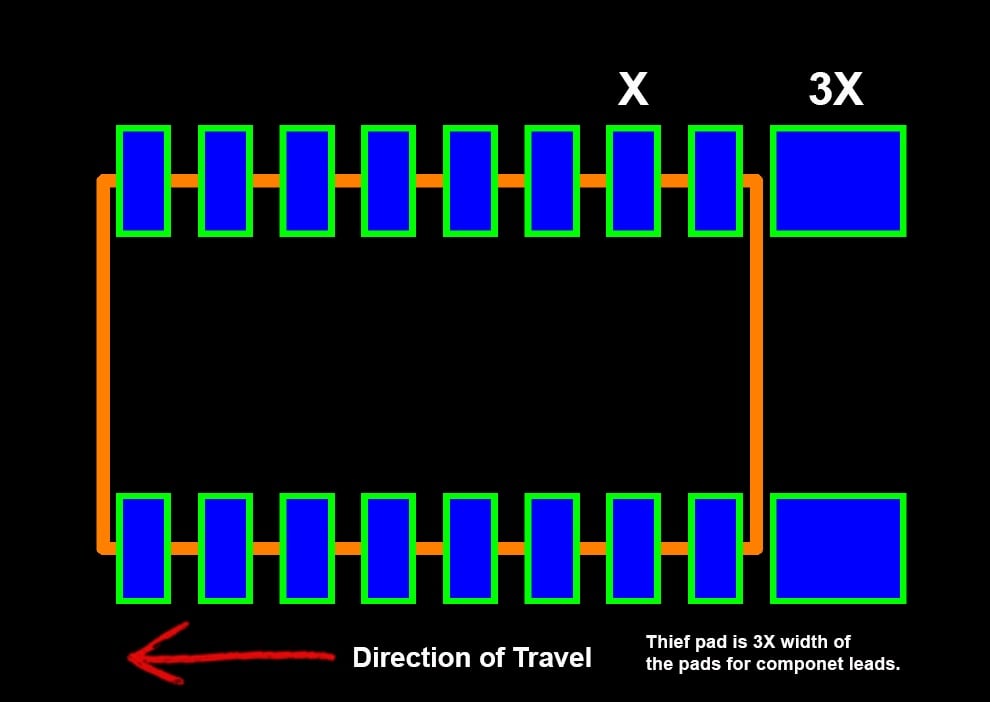
Wave soldering, the process of attaching electronic components to the printed circuit board (PCB), becomes increasingly difficult as pitch decreases. Pitch is the center-to-center spacing between the conductors on a PCB. So, knowing that wave soldering becomes harder with lower pitch measurements, what is the minimum pitch distance you should maintain on circuit boards? With the appropriate controls, it is still possible to get a good result with pitches as low as 0.5mm (.0197"). Wave soldering defects can occur in pitches below 0.5mm, so we recommend this as the minimum pitch to wave solder a PCB.
Read More