
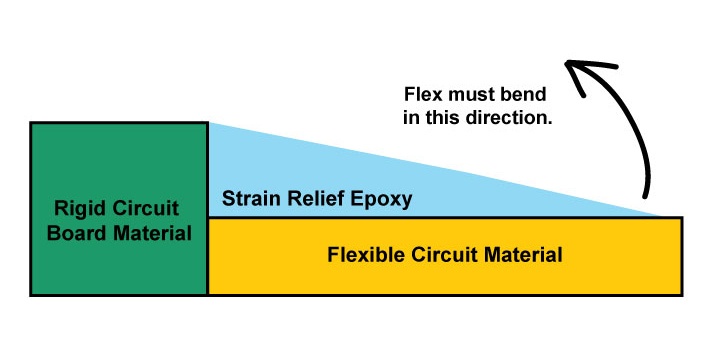
For rigid-flex printed circuit boards (PCBs), the space joining rigid material to flex material (Transition Zone) sometimes contains imperfections that, although acceptable, could impact effectiveness of the final part. Transition zone imperfections can include any of the following:
Read MoreThe copper weight and corresponding thickness used in a flexible circuit board need to be carefully selected in order to meet both the electrical and mechanical bend requirements of specific flex circuit design. Copper weight for a flex PCB is both the stiffest and most critical component.
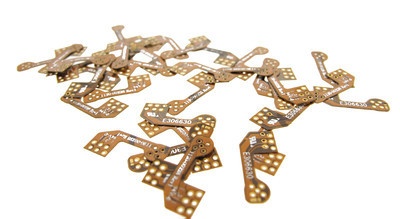
Read MoreA flexible circuit coverlay is a polyimide-based protective layer laminated over exposed circuitry in a flex PCB. It performs the same role as solder mask on rigid circuit boards, while maintaining the flexibility and durability required for bendable designs. Proper material selection, thickness, and opening design are critical to ensuring both protection and functionality.
Read MoreFlex circuits provide design options that rigid printed circuit boards cannot. Whether used in new designs or to improve existing assemblies, flexible printed circuits enable tighter packaging, improved system reliability, broader electrical capabilities, and long‑term cost reductions.
Read More