



When it comes to flex and rigid-flex printed circuit boards, flex is typically seen as insurmountable compared to rigid. This is primarily due to the two main differences between flex and rigid: the materials and the function, both of which seem to give pause to many designers.
Boiling it down to basics, flex PCBs can be everything rigid PCBs can be, but they add the ability to move, bend, and shape to certain degrees to suit the final assembly. This added layer of function and material, however, can lead to failures that many do not anticipate.

Bend Radius Miscalculations
One of the frequent causes of flex circuit failure is improper bend radius design. The bend radius defines how tightly a flex circuit can bend without damaging the copper traces. When this factor is ignored or underestimated, the results can include creases, intermittent opens, or complete circuit breaks.
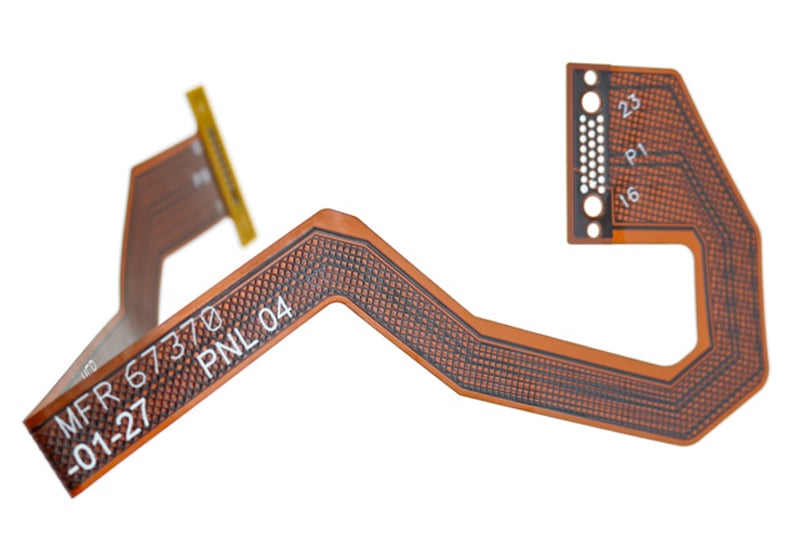
Example of a flex circuit creased after being bent.
The simplest way to prevent these issues is to calculate the required bend radius before manufacturing and to build in a margin of safety for the final assembly. If space constraints make it difficult to maintain the calculated radius, several design adjustments can help. Using thinner core materials or thinner coverlays improves flexibility, while in extreme cases, substituting solid copper planes with crosshatched (or “hatched”) ground patterns can reduce strain on the circuit.

Material Differences and Their Impact
Material selection is another critical consideration that can lead to long-term reliability issues if not handled properly. Flex circuit materials are drastically different from those used in rigid PCBs, both in composition and performance.
Adhesives, for example, must be chosen carefully based on the final environment and use case. If an adhesive cannot withstand temperature extremes, vibration, or exposure to chemicals, it may delaminate or degrade prematurely.
Likewise, stiffeners must be chosen to match the specific function of each area of the circuit. Polyimide (PI) stiffeners are typically used in ZIF connector regions where precision and rigidity are critical, while FR4 stiffeners are a better choice for areas that require structural reinforcement or connector support.
Bend Location and Mechanical Stress
The physical location of the bend in a flex circuit can make or break the design. Bends should never occur near vias, stiffeners, or rigidized sections. Placing vias within or near a bend zone introduces high mechanical stress, which can lead to cracking or via barrel failure. Similarly, bending against a stiffener or along a sharp FR4 edge can create creases or even cut through the flexible material.
The best way to avoid these problems is to design clear bend zones and ensure that vias and rigid interfaces are kept well outside of them. PCB designers can visually mark bend areas using silkscreen lines, which act as reference points during assembly and installation. It also helps to design the assembly so that the flex naturally bends in a predetermined direction rather than being left to bend freely during installation. Incorporating strain reliefs along stiffener edges further reduces stress concentrations and extends the life of the circuit board.
Preventing Common Oversights
While flex circuit design is inherently more complex than rigid circuit boards, many engineers tend to overcomplicate it or overlook key mechanical considerations. The best approach is to balance electrical performance with mechanical durability from the start. Parameters such as bend radius, via location, and material choice should be reviewed early in the design cycle and validated through a Design for Manufacturability (DFM) review.
Flex circuits don’t tolerate guesswork; each mechanical feature and material layer contributes to the overall function of the finished assembly. Partnering closely with the manufacturer during the design phase helps ensure all potential failure points are identified and mitigated before production begins.
Summary
While flex can be complicated, many tend to overcomplicate it or are unable to regard things they may not be aware of. Bend radius, design for vias and bend locations, and many other items can be hard to keep track of during design.
The design process, even during assembly design, can be complicated for flex, but it is always best to involve the manufacturer from the start.
Key Takeaways
- Proper bend radius is critical: Always calculate and validate the bend radius before production to prevent cracked circuits and intermittent opens.
- Material choice drives reliability: Match adhesives and stiffeners to the specific operating environment to prevent delamination or structural failure.
- Avoid vias and stiffeners in bend areas: Keep mechanical stress away from these regions to eliminate common fracture points.
- Define and communicate bend zones early: Use silkscreen indicators and controlled bend directions to ensure consistency during assembly.
- Collaborate with your manufacturer: Early DFM reviews catch issues before fabrication and greatly improve long-term flex reliability.