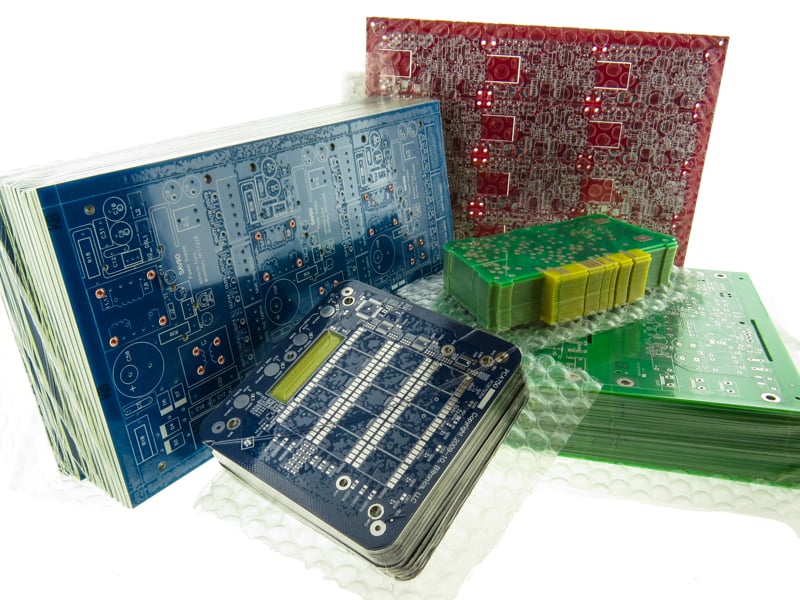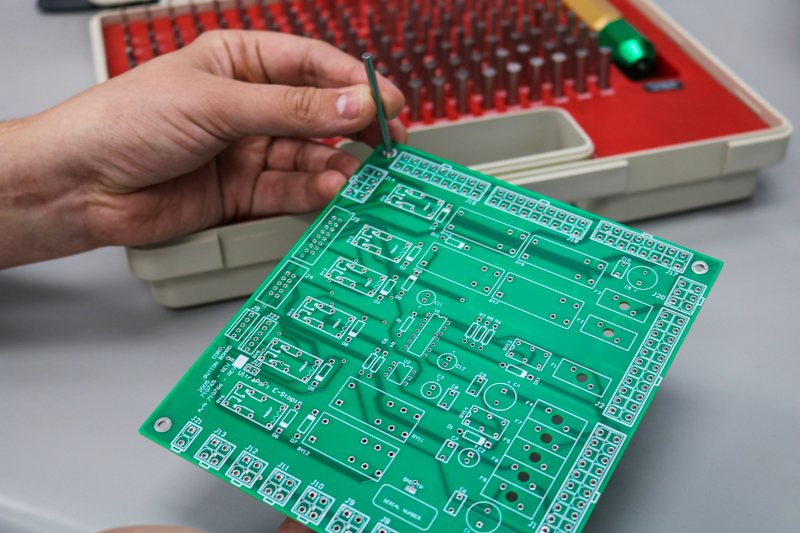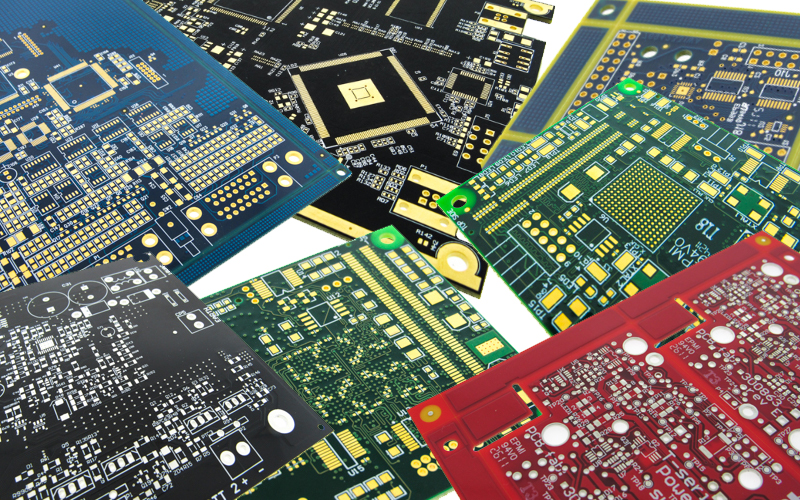


I love looking at data. Sounds weird, right? I guess it is because I have been working in the industry for so many years. I have seen the technology changes, and I just find it fascinating. In this blog post, we will recap the past, which some of the time creeps its way back to Epec, the present, and the future of printed circuit boards (PCBs).
Let’s get to it.
Angie Brown
Recent Posts
Printed circuit boards (PCBs) require holes to be drilled through or partially through laminate materials. These holes are used to create continuity between the top and bottom or to a mid-layer on the PCB. The holes allow traces, pads, and copper polygons to be connected throughout the different layers of the board.
Read MoreAs our world continues to evolve to an online buying market for everything for our homes, schools, and offices, you may have noticed in some cases, the quality is not exactly what you thought you saw and bought online. We have all had that men’s XL shirt we bought for dad’s birthday arrive only to fit our 7-10-year-old, or the gift for Christmas arriving in January. Is it cost vs. quality, convenience vs. going out shopping, or is it the ongoing COVID-19 situation?
Read MoreWithin the first few pages of IPC standard for printed circuit boards, there is a reference table 1-2 that is called “Default Requirements.” When reading the standard looking for some guidance, one may question “default” as part of a requirement. Often, when we receive circuit board production files there is not enough information from a manufacturing standpoint but certainly enough to quote.
Read MoreRemembering back to grammar school and the standard 8-box of Crayola crayons and when they expanded to 16 or 32 colors, never mind 64. If you managed to get this box with the sharpener, you had it made. I love color; the more the better.
Read MoreMany engineers associate online printed circuit board (PCB) ordering with simple prototype boards and low-volume production. However, Epec’s online ordering tool can also support advanced printed circuit boards, including designs with up to 16 layers, high-temperature materials, blind and buried vias, and controlled impedance requirements.
Read MoreWhen I think of the song, “Through the Years” by Kenny Rogers from 1981 (played at my high school graduation in 1982), I wouldn’t have imagined I would still be in the printed circuit board (PCB) industry. Yes, 1982! Wow. There are several nostalgic “things” about the time spent in the industry that still remind me of my hometown, family, friends, the U.S., my first real job doing something I had never heard of, hoping to make ends meet.
Read MoreIn 1913, the comic strip (which then led to the phrase of the same name) “Keeping Up with the Joneses” was brought to life in print. Although that comic strip ended in 1940, let’s face it, in every aspect of the phrase, it is still in practice today. In business and as consumers, we look ahead to what is next. From a freshly opened new cell phone or television, we are already counting the days until the next rendition is available.
Read MoreAs printed circuit board (PCB) technology has been on a steady incline for many years, the main focus has been on what else can we make this part do. Add more layers, decrease circuit widths, add more components, buried vias, blind vias, control the impedance – the list of changes in technology is lengthy. As a manufacturer of PCBs, we see the finished design ready to go to production, but is it? Often, we look at a received customer data production and think, “can this part be produced?”
Read MoreAs costs of materials, freight, and labor rise it has become imperative to seek out alternative ways to save costs in the manufacturing process. With traditional means of saving no longer as viable, we now must be more creative and specific when we’re asked, “what can I do to lower the cost of my printed circuit board (PCB)?”
Read More