



Cable shielding plays an important role in protecting electrical signals from electromagnetic interference, but not every cable assembly requires the same level of protection. Adding a shield can improve signal integrity and reduce susceptibility to interference, but it can also increase cable diameter, stiffness, cost, and assembly complexity.
Choosing between a shielded and unshielded cable requires engineers to consider the electrical environment, signal type, mechanical requirements, available space, bend radius, and expected movement of the finished assembly.
What Is Cable Shielding?
Cable shielding refers to an electrically conductive layer incorporated into the cable construction to help protect signals from electromagnetic interference. This type of shielding should not be confused with armored shielding, like conduit, or other mechanical protection intended to resist crushing, abrasion, or physical damage.
Electrical shields typically surround individual conductors, twisted pairs, groups of conductors, or the entire cable bundle. Depending on the design, the shield can help prevent external electromagnetic energy from interfering with signals carried by the cable while also helping contain electromagnetic energy generated by the conductors themselves.
The shield is generally connected to ground through a drain wire, connector contact, shell, or other termination point so the shield can be properly referenced to the system or earth ground.
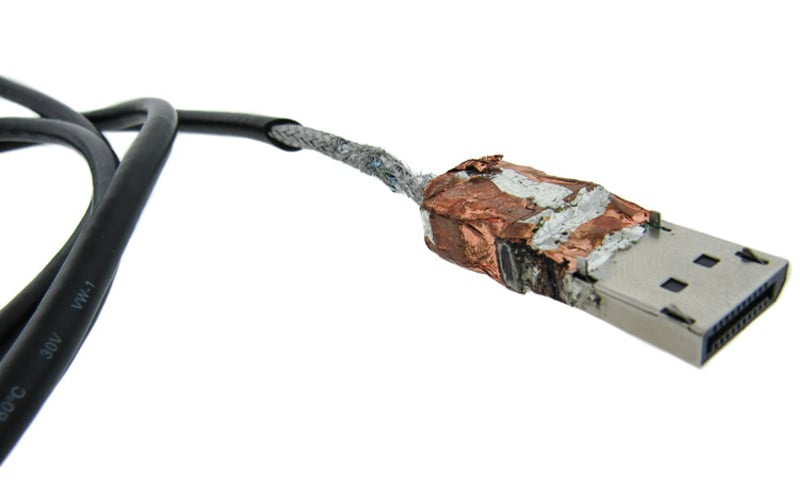
Shielded USB cable with foil shield layer that covers the USB connector body.
What Is EMI and Why Does It Matter?
Electromagnetic interference, or EMI, is unwanted electrical noise that can disrupt the signals traveling through a cable. EMI may originate from motors, power supplies, switching electronics, radio-frequency equipment, nearby cables, or other electrical systems.

The effect of EMI depends on the application. In some circuits, minor interference may have little measurable impact. In high-speed data, low-level analog signals, communication systems, or other noise-sensitive applications, interference can result in corrupted data, inaccurate readings, intermittent operation, or reduced system performance.
Shielding provides an additional layer of protection between signal conductors and potential interference sources.
Can a Cable Operate Without Shielding?
Yes. Many cable assemblies operate successfully without any electrical shielding.
Whether shielding is necessary depends on the signal being carried and the environment where the cable will operate. Simple power cables and some low-frequency circuits may perform reliably without shielding, especially when installed away from significant EMI sources.
The challenge is that an unshielded cable is generally more susceptible to interference once installed in a noisy electrical environment. A cable that performs correctly during bench testing may behave differently when routed alongside power wiring, motors, switching equipment, or other sources of electromagnetic noise.
This is why the complete installation environment should be considered when determining whether a shield is required.
Common Types of Cable Shielding
Two of the most common approaches are foil shielding and braided shielding. Depending on the electrical and mechanical requirements, they can be used independently or combined within the same cable.
Foil Shields
A foil shield typically consists of a thin conductive layer bonded to a polyester or similar film. The foil wraps around the conductors and provides electrical shielding while adding relatively little thickness to the cable.
Foil shields are commonly used with a drain wire. The drain wire remains in contact with the conductive foil and gives the cable assembly technician a practical way to terminate the shield to a connector contact, ground point, or other part of the electrical system.
Because foil is thin, it can be a useful option where cable diameter, flexibility, or available space is a concern.
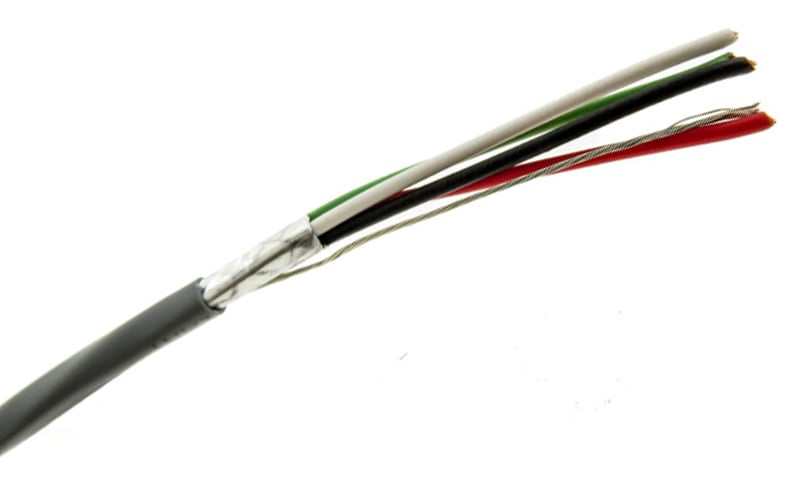
Foil shield with drain wire.
Braided Shields
A braided shield consists of conductive strands woven around the cable bundle. Tinned copper is commonly used for this construction.
The braid creates a conductive mesh around the cable and can provide both electrical shielding and additional mechanical durability. Because it contains more material than a thin foil layer, however, a braided shield generally increases cable diameter, weight, and stiffness.
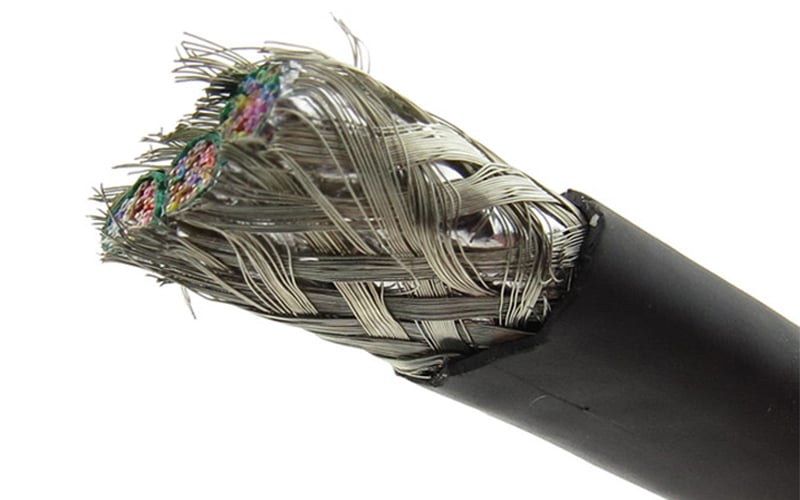
Braided shield with multiconductor cable.
Combination Shielding
Foil and braided shields can also be combined when greater shielding performance is required.
High-speed data cables are a common example. Individual twisted pairs may each be wrapped with foil and include their own drain wire. The complete bundle of twisted pairs can then be surrounded by foil and an overall braided shield.
Custom cable constructions can include a single twisted pair or several dozen pairs depending on the number of circuits and signals required. And each of these, or some of these, may have their own foil and/or braided shield.
Shielded vs. Unshielded Cable
The decision to add shielding involves several electrical and mechanical tradeoffs.
A shield can improve resistance to EMI and help protect signal integrity, but it also adds material to the cable cross-section. This typically increases overall bundle diameter and can make the cable heavier and less flexible. This also adds a small amount of cost to the bulk wire.
Braided shields in particular can increase cable stiffness. This may become important in applications involving tight bend radii, repetitive motion, or high-cycle flexing. A cable that contains more shielding material may not flex as easily as a comparable unshielded construction.
Shielding also adds manufacturing steps. Technicians may need to prepare, trim, fold, terminate, or connect the shield and drain wire during assembly. These additional operations can increase labor and overall cable cost.
For some applications, these tradeoffs are minor compared with the electrical protection provided. For others, flexibility, size, or weight may be more important than additional EMI protection.
Shielding Can Be Customized for the Application
A custom cable does not have to use a standard shielding construction.
Engineers can specify the type and location of shielding as well as details such as drain wire gauge, strand count, conductor arrangement, and how the shield is incorporated into the overall cable bundle.
Individual signal pairs can be shielded while other conductors remain unshielded. A foil shield may be used around one group of conductors while an overall braid surrounds the entire cable. Other designs may require only an overall foil shield.
This flexibility allows the cable construction to balance EMI protection with diameter, flexibility, weight, and cost.
Should You Include Shielding Even If It May Not Be Needed?
In some cases, engineers choose to incorporate shielding into a cable design even when they are not certain it will ultimately be required.
There is a practical reason for this approach. A shield that has already been designed into the cable can simply remain unconnected if testing determines that it is unnecessary. Adding shielding later may require changes to the cable construction, connector, pinout, drain wire, termination method, or tooling.
Later-stage redesigns can increase costs and extend the project schedule.
When space, cost, and flexibility allow, incorporating provisions for shielding early can provide additional design flexibility during testing and system integration.
That does not mean every cable should automatically be shielded. When cable diameter, bend radius, repetitive flexing, or weight are primary concerns, an unshielded cable or a thin foil-shielded construction may be more appropriate.
Adding unshielded twisted pairs may help improve resilience to EMI without adding a shielding layer. Twisting the conductors helps reduce susceptibility to electrical noise. Pair unshielded twisted pairs with an otherwise shielded cable to further customize the shielding approach.
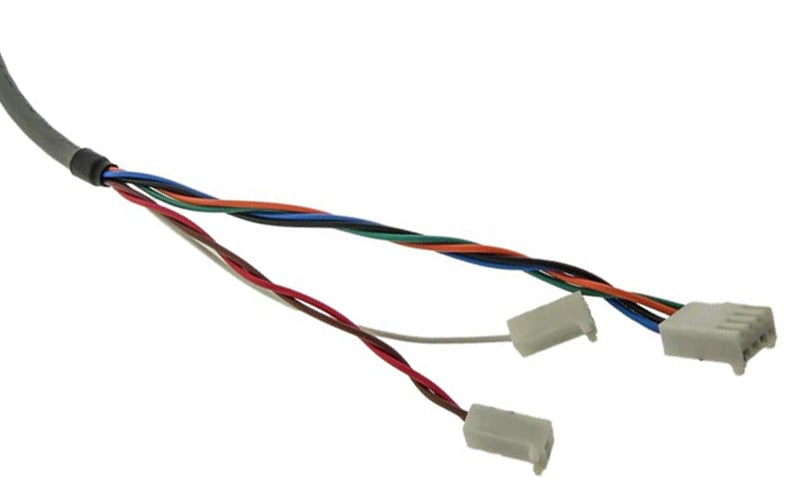
Unshielded cable with twisted pairs.
Making the Right Choice
There is no universal answer when choosing between shielded and unshielded cable assemblies. The correct construction depends on the electrical signals, surrounding EMI environment, mechanical requirements, routing, available space, and expected service conditions.
Shielding can provide valuable protection for noise-sensitive circuits, but it can also increase cable diameter, stiffness, manufacturing complexity, and cost. When flexibility or bend radius is critical, engineers may choose a thin foil shield or omit shielding when the electrical environment permits.
Evaluating shielding requirements early in the design process gives engineers more options. Designing the cable, connectors, drain wires, and termination points with potential shielding requirements in mind can help avoid costly changes later while ensuring that the finished cable assembly provides the electrical and mechanical performance required by the application.
Summary
Choosing between a shielded and unshielded cable requires balancing electrical performance with mechanical and manufacturing requirements. Shielding can help protect sensitive signals from electromagnetic interference, but it also adds material, increases cable diameter and stiffness, and creates additional assembly steps.
The best cable construction depends on the application. Signal type, EMI exposure, available space, bend radius, flexibility, connector design, and expected service conditions should all be reviewed early. When shielding may be needed, planning for it during the initial design phase can help avoid costly connector, pinout, and cable construction changes later.
Key Takeaways
- Cable shielding helps protect electrical signals from EMI and should not be confused with mechanical armor or protective conduit.
- Foil and braided shields offer different advantages, and they can be combined when additional EMI protection is required.
- Unshielded cables can operate reliably when EMI exposure is low, and the application does not require additional signal protection.
- Shielding can increase cable diameter, stiffness, cost, and assembly complexity, which may affect applications requiring tight bend radii or repeated flexing.
- Evaluating shielding requirements early can reduce the risk of late-stage redesigns involving the cable construction, drain wire, connector, pinout, or termination method.