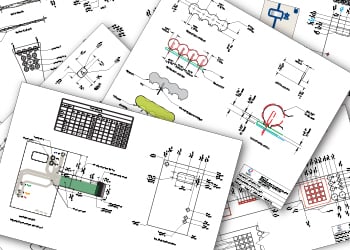




Designing a keypad that feels intuitive, durable, and precise is both an art and a science. While touchscreens and soft-key interfaces have become increasingly common, hard keys remain a staple in many industries, especially where tactile feedback, durability, and reliability are crucial.
Whether you’re designing a keypad for aerospace equipment, medical devices, or consumer electronics, understanding the design complexity of hard keys will ensure your product performs as expected in the hands of users.

Difference Between Hard Keys and Soft Keys
At the most basic level, the distinction between hard keys and soft keys lies in their material composition and mechanical behavior. Hard keys are typically made from rigid plastics, such as ABS or polycarbonate, providing a solid and precise actuation with a defined tactile response. On the other hand, soft keys are molded from flexible elastomers such as silicone rubber. These keys deform under pressure and return to their original shape, offering a quieter and more cushioned feel. When designing hard keys, your choices in materials, key structure, and tactile mechanics will all determine how the keypad feels and performs in real-world use.

User interface assembly designed with hard keys.
Material Choice
Material selection defines both the performance and user experience of your keypad. Hard keys are often made from rigid plastics such as ABS or polycarbonate, offering crisp actuation, dimensional stability, and durability. By contrast, soft keys are typically molded from silicone rubber or other elastomers that allow for flexibility, sealing, and quiet operation. The right choice depends on your application; hard plastics deliver sharp tactile response and longevity under heavy use, while elastomers provide comfort, environmental protection, and a softer touch.
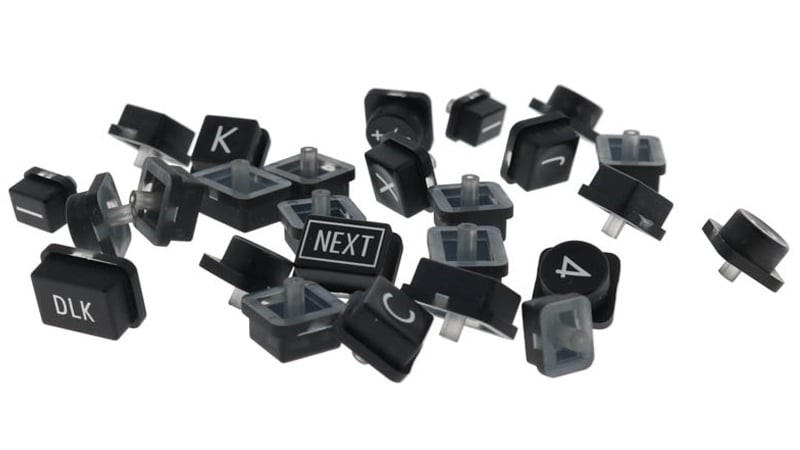
Hard keys are made from rigid plastics.
Key Design
The shape, size, and surface finish of each key directly influence usability and ergonomics. Hard keys benefit from defined edges or concave surfaces that guide the user’s finger to the center of the key, reducing input errors. Soft keys, being flexible, can be contoured or molded with integrated legends or light windows to enhance visibility and sealing. Whether using rigid or elastomeric materials, thoughtful key geometry ensures consistent operation and comfort across all conditions.
Tactile Response
One of the defining characteristics of hard keys is their distinct tactile snap once pressed. This response is achieved through the combination of material stiffness, switch mechanism, and key travel distance. Soft keys, while inherently quieter and less crisp due to their flexible nature, can still be engineered for a responsive feel through the use of domes or mechanical supports beneath the rubber surface. Achieving the right tactile balance helps users operate the device confidently without visual confirmation.
Proper Fitting
When designing a keypad assembly, the interaction between each key and its surrounding bezel is critical to achieving a functional and consistent assembly. The fit determines how smoothly a key moves within its cavity and how well it is protected from environmental factors such as dust, moisture, or light leakage. A well-designed bezel should guide the key uniformly during actuation without interruption.
Tolerancing
Proper tolerancing ensures that the mechanical fit between the keys and the bezel remains consistent across production. Even minor variations in mold dimensions or material shrinkage can affect how a key feels or moves. Defining appropriate dimensional clearances helps maintain smooth operation without excessive play or friction, while also minimizing risks such as light leakage or key binding. The tolerances of the overall keycap footprint and the hole it resides in will need tight tolerances and require a critical eye. In high-precision or sealed applications, tighter tolerances are essential to achieving both functional reliability and long-term durability.
Light Leak
In backlit keypads, light leakage can significantly impact both appearance and functionality. Uncontrolled light escaping around or beneath the key can cause uneven illumination, glare, or visual distraction. To prevent this, designers should focus on achieving a precise fit between the key and bezel, paired with the right material and coating choices.
Using light-blocking pigments, matte surface finishes, or secondary barriers such as internal baffles can help contain illumination to the intended regions. The result is a clean, professional lighting effect that enhances visibility without compromising design integrity.
Key Sticking
A high-quality keypad must deliver smooth and consistent actuation, no matter where the key is pressed. Binding or sticking typically occurs when clearances are too tight or when the key’s travel path is not properly guided by the bezel or housing geometry.
To prevent this, ensure that the key’s sidewalls, guides, and mounting features allow for controlled movement with uniform resistance. Incorporating lead-in chamfers, low-friction coatings, or spacers can further reduce side-loading and enhance smooth travel. The goal is to maintain a consistent feel, whether the user presses the center, corner, or edge of the key.
Additional Parts with Keys
A successful hard key design doesn’t rely on the keycap alone. Several supporting components work together to achieve the right tactile feel, travel, longevity, and functionality.
Bumpers
Bumpers are added to the end of the keycaps where they interact with the dome switch of the PCBA. They help cushion the key’s movement, absorb impact, and extend the life of both the key and switch. They also contribute to noise reduction and smoother operation.
Dome Switches
Metal or silicone dome switches are placed beneath hard keys on the PCBA to provide the desired tactile feedback. The dome collapses under pressure and snaps back into shape when released, producing that familiar click and ensuring consistent actuation force.
Spacers
Spacers help maintain alignment and consistent travel distance between the key and the underlying circuitry. They are especially important in multi-layer designs or when integrating dome switches with PCB assemblies. When dealing with illuminating keys, spacers are often manufactured with clear acrylic so as not to affect the luminance of the keys once illuminated.
Gaskets
Gaskets play a dual role: they help seal the keypad from dust and moisture, and they can also improve key feel by damping vibrations. In outdoor or medical environments, proper gasket design is essential to meeting IP-rated sealing requirements.
Summary
Designing a high-performance keypad starts with understanding how every detail, such as materials, mechanics, and fit, shapes the user’s experience. Hard keys provide crisp, reliable feedback, while soft rubber keys deliver comfort, flexibility, and environmental sealing.
From tight bezel fits and controlled tolerances to supporting components like dome switches and gaskets, every element contributes to lasting quality and a satisfying press. When form and function align, the result is a keypad that not only performs flawlessly but feels exactly right in the user’s hands, press after press.
Key Takeaways
- Hard keys excel where feedback and durability matter most: Rigid key materials such as ABS and polycarbonate provide crisp tactile response, long service life, and predictable actuation in demanding environments.
- Material and geometry define the user experience: Key shape, surface finish, and material stiffness directly influence accuracy, comfort, and confidence during operation, especially when users cannot rely on visual confirmation.
- Fit and tolerancing control consistency and reliability: Proper clearances between the key, bezel, and housing prevent binding, sticking, and uneven feel while also reducing light leakage and wear over time.
- Lighting performance depends on mechanical control: Backlit keypads require precise fits, light-blocking materials, and controlled pathways to prevent glare, halo effects, and inconsistent illumination.
- Supporting components are critical to long-term performance: Dome switches, bumpers, spacers, and gaskets work together to deliver a consistent tactile feel, manage impact forces, maintain alignment, and meet environmental sealing requirements.