



In cable assembly manufacturing, overmolding is more than just a finishing touch; it is the process that protects internal wires, seals out moisture, and provides durability in tough environments. The quality of an overmolded cable assembly often determines how reliable the final product will be in the field. But one factor that is sometimes underestimated is how much temperature and humidity influence the overmolding process.
Both temperature and humidity impact how materials behave during molding, how bonds form, and how the final cable performs in real-world applications. If these variables are not controlled, even the best design can end up with defects, rework, or long-term failures. Let’s take a closer look at where these environmental factors make the biggest difference.

Material Flow and Mold Filling
Overmolding materials, such as polyvinyl chloride (PVC), polyurethane (PU), or thermoplastic elastomers (TPE), need to flow properly to fill a mold completely.
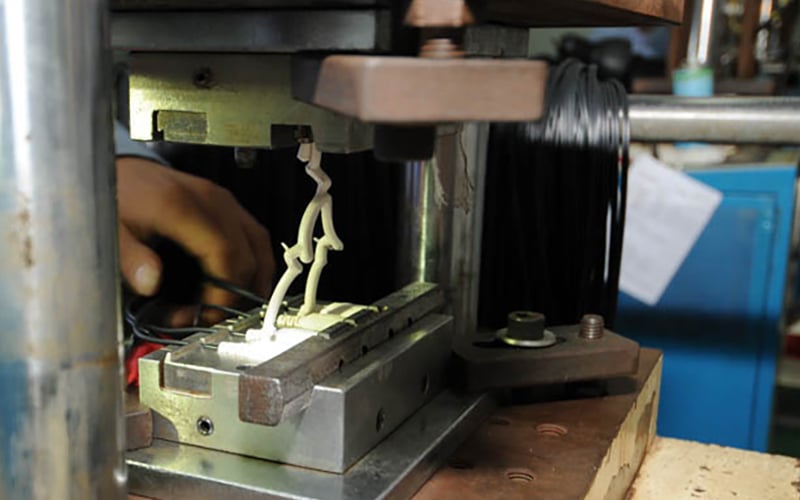
- Temperature Control: If the melt temperature is too low, the material may not fully flow into all the cavities, leaving voids or incomplete fills. Too high, and the polymer can start to degrade, producing brittle parts or burned surfaces. Both extremes reduce the protective integrity of the overmold.
- Humidity Sensitivity: Some polymers absorb moisture from the environment before processing. When heated, this moisture turns into steam, causing bubbles or weak points in the molded material. These imperfections compromise both the seal and the mechanical strength of the overmolded section.
A consistent, properly conditioned material supply is critical to avoid these issues.
Bonding and Adhesion Quality
For a cable assembly, it’s not enough that the mold fills. The overmold must also adhere strongly to the cable jacket, connector, or insert.
- Mold Temperature: The temperature at the interface plays a big role in adhesion. Too cold, and the overmold may not bond well, leading to delamination or separation during flexing.
- Moisture Effects: High ambient humidity can cause condensation on cable surfaces, acting as a barrier to proper bonding. Over time, this weak interface can open gaps where water or contaminants may enter, defeating the purpose of the overmold.
Surface prep, material conditioning, and controlled molding conditions all help secure long-term adhesion.
Dimensional Stability and Shrinkage
Every molded part shrinks as it cools, but uneven cooling caused by temperature swings can introduce warpage.
- Temperature Fluctuations: If one side of the overmold cools faster than the other, the part can warp or distort. In cables, this can mean poor sealing around connectors or strain relief sections that don’t align properly.
- Moisture Absorption: Humidity can also affect dimensional stability. Moisture-sensitive materials expand slightly when they absorb water, altering their size or shape after molding. That shift can compromise tolerance-critical fits in connectors or housings.
Stable processing conditions ensure the part stays within design specs.
Cycle Time and Production Efficiency
Overmolding cables is not just about quality; it’s also about efficiency.
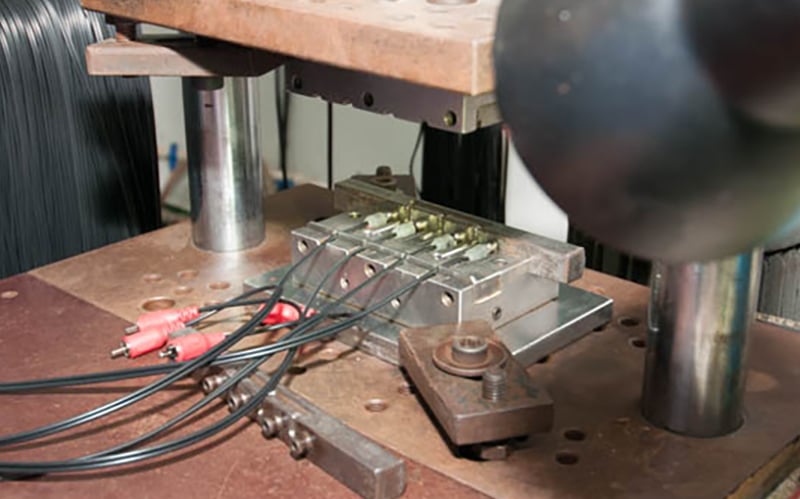
- Cooling Time: If the molding temperature is off, cycle times increase. Too hot means slower cooling, and too cold often requires rework. Both reduce throughput and raise costs.
- Drying Needs: When ambient humidity is high, some materials require additional pre-drying before molding. This adds processing steps and lengthens production cycles.
Optimizing temperature and keeping materials dry not only improves quality but also helps streamline production.
Electrical and Environmental Performance
Ultimately, cable assemblies must perform reliably in the field, often in harsh environments.
- Seal Integrity: Poor temperature control can create micro-gaps or weak seals in the overmold, which may not be visible during inspection but can let in moisture during service.
- Humidity Risks: If overmolds absorb moisture or were molded in high humidity without proper controls, the cables may suffer long-term issues. Moisture ingress can corrode connectors, reduce insulation resistance, and even cause failures in sensitive electronic applications.
For industries like aerospace, medical, or industrial automation, these risks can’t be ignored.
Summary
Temperature and humidity are not just background conditions during overmolding; they are active variables that shape the outcome of every cable assembly. From material flow to bonding strength, dimensional stability, production speed, and final electrical performance, these factors play a decisive role in quality and reliability.
The takeaway is simple: managing environmental conditions is as much a part of cable assembly engineering as choosing the right materials or designing the right strain relief. By paying attention to how temperature and humidity interact with the overmolding process, engineers and manufacturers can ensure that their cables don’t just look good out of the mold but perform reliably for years in the field.
Key Takeaways
- Material behavior is temperature-dependent: Too hot or too cold can ruin flow, adhesion, or surface quality.
- Humidity impacts polymers: Moisture absorption leads to bubbles, weak spots, or long-term dimensional shifts.
- Bonding strength depends on clean, controlled surfaces: Condensation or poor mold temperature weakens adhesion.
- Efficiency suffers without control: Poor conditions increase cycle times, rework, or drying steps.
- Field performance ties back to process control: Weak seals or moisture ingress can cause electrical failures in service.